
Attic Insulation Installation Los Angeles
Fiberglass batts. Blown-in insulation. Spray foam. Radiant barrier. Fire-resistant insulation specialist. Title 24 compliant. Mold remediation and Microban sanitization. Licensed roofing contractor. First roofing job in 1991.

A roof alone does not control comfort.
Your attic insulation system does.
If your attic is under-insulated, your HVAC works overtime. If your insulation is contaminated, your family breathes contaminated air. If your attic has no radiant barrier, the California sun bakes your living space from above.
That is not marketing. That is physics.
At SoCal Wholesale Roofing, we provide complete attic insulation services for Los Angeles homes—from removal and sanitization to new installation and fire-resistant upgrades. We are a licensed roofing contractor with roofing experience dating back to 1991, and we understand that your roof system is only as good as the insulation beneath it.
Especially if we are replacing the roof decking, it is the perfect time to replace the insulation.
Why? Because the attic will be open.
That means we can easily remove old insulation, sanitize the attic, seal all penetrations, add radiant barrier, install fresh insulation, and optimize your ventilation—all in one project. Otherwise, replacing insulation later means crawling on hands and knees through low-ceiling attic spaces, which increases labor time and cost significantly.
Ventilation is the other half of the equation. Insulation slows heat transfer. Roof vents remove heat and moisture. Attic fans actively blow hot air out. You need all three working together for a complete attic system.
We Protect Your Home Before We Insulate It
We take meticulous care of your home during every insulation project. Before any work begins, we block off the entire work area—ceilings, hallways, furniture—so that absolutely no dust, mold, mildew, rat droppings, or debris enters your living space.
Once the attic is cleared and all contaminated material removed, we sanitize the entire space with Microban antimicrobial treatment. Then—and only then—we lay the fiberglass batts, blow the blown-in insulation, or spray the foam.
Your family breathes the air in your home. We make sure the insulation process doesn't compromise it.
Attic insulation — West Hills, CA
What Are the California Title 24 Attic Insulation Requirements for Los Angeles?
California Title 24 is the state\'s energy efficiency building code, and it sets minimum insulation requirements for every home in Los Angeles. The City of Los Angeles enforces Title 24 through the Department of Building and Safety (LADBS), and compliance is required for all new construction, roof replacements involving deck work, and major renovations.
Los Angeles falls within Climate Zones 6, 8, and 9 depending on exact location. For most of LA County, the minimum attic insulation requirement is R-30 to R-38. We install to R-38 or higher as standard practice because it provides the best long-term energy savings and exceeds the minimum code requirement.
Climate Zone 6
Santa Monica, Beverly Hills, Westside
R-30 minimum
Climate Zone 8
Downtown LA, Hollywood, Mid-City
R-30 minimum
Climate Zone 9
San Fernando Valley, Pasadena, Glendale
R-38 recommended
Title 24 also requires that insulation be installed in contact with the air barrier (no gaps) and that all attic floor penetrations (recessed lights, ductwork, electrical boxes) be sealed to prevent air leakage. Non-compliance can result in failed inspections and delayed project completion.
Read our complete guide to Title 24 attic insulation requirementsHow Does Attic Insulation Help Prevent Fire Damage in Los Angeles?
We specialize in fire-resistant attic insulation—and in wildfire-prone Los Angeles, this is not optional. Proper fire-resistant insulation slows fire spread through the attic, gives your family more time to evacuate, and can be the difference between a damaged roof and a total loss.
Why Fire-Resistant Insulation Matters in Los Angeles
- Fiberglass insulation is naturally non-combustible—it will not catch fire or contribute to flame spread
- Mineral wool insulation withstands temperatures up to 2,000°F—it is used as a firestop material in commercial construction
- Spray foam insulation includes fire retardants and is tested to ASTM E84 flame spread standards
- Proper insulation combined with fire-rated O'Hagin vents and sealed penetrations creates a fire-resistant attic envelope
- Chapter 7A wildfire compliance in fire zones requires specific attic insulation and vent configurations
We assess every attic for fire resistance as part of our insulation services. If your home is in a Very High Fire Hazard Severity Zone (VHFHSZ)—which includes many areas in the San Fernando Valley, Hollywood Hills, Pacific Palisades, and Malibu—fire-resistant insulation is not just smart. It may be required.
Learn more about fire-resistant attic insulation for Los Angeles homesWhat Is R-Value and Why Does It Matter for Attic Insulation?
R-value measures insulation's resistance to heat flow. The higher the R-value, the better the insulation resists heat transfer. For Los Angeles attics, higher R-value means your living space stays cooler in summer and warmer in winter, and your HVAC system works less.
| Insulation Type | R-Value Per Inch | Inches for R-38 | Typical Cost/sq ft |
|---|---|---|---|
| Fiberglass Batts | R-3.0 to R-3.8 | 10–13 inches | $1.50–$3.50 |
| Blown-In Fiberglass | R-2.2 to R-2.7 | 14–17 inches | $1.50–$3.50 |
| Blown-In Cellulose | R-3.2 to R-3.8 | 10–12 inches | $1.50–$3.50 |
| Open-Cell Spray Foam | R-3.5 to R-3.7 | 10–11 inches | $3.00–$5.00 |
| Closed-Cell Spray Foam | R-6.0 to R-7.0 | 5–6 inches | $5.00–$7.00 |
| Rigid Foam Board (XPS) | R-5.0 | 7–8 inches | $2.50–$4.50 |
| Radiant Barrier (reflective) | N/A (reflects heat) | Added to any system | $0.75–$1.50 |
R-value is not the only factor. Air sealing, moisture management, and radiant heat reflection all contribute to overall insulation performance. That is why we analyze your entire attic system—not just measure R-value—to recommend the most effective solution for your Los Angeles home.
Read our complete guide to attic insulation R-valuesWhat Is Fiberglass Batt Insulation and Is It Right for Your Attic?
Fiberglass batt insulation is pre-cut insulation panels made from spun glass fibers. Batts are the most recognizable insulation type—the pink or yellow rolls you see at home improvement stores. They are installed between attic joists and provide reliable, cost-effective thermal resistance.
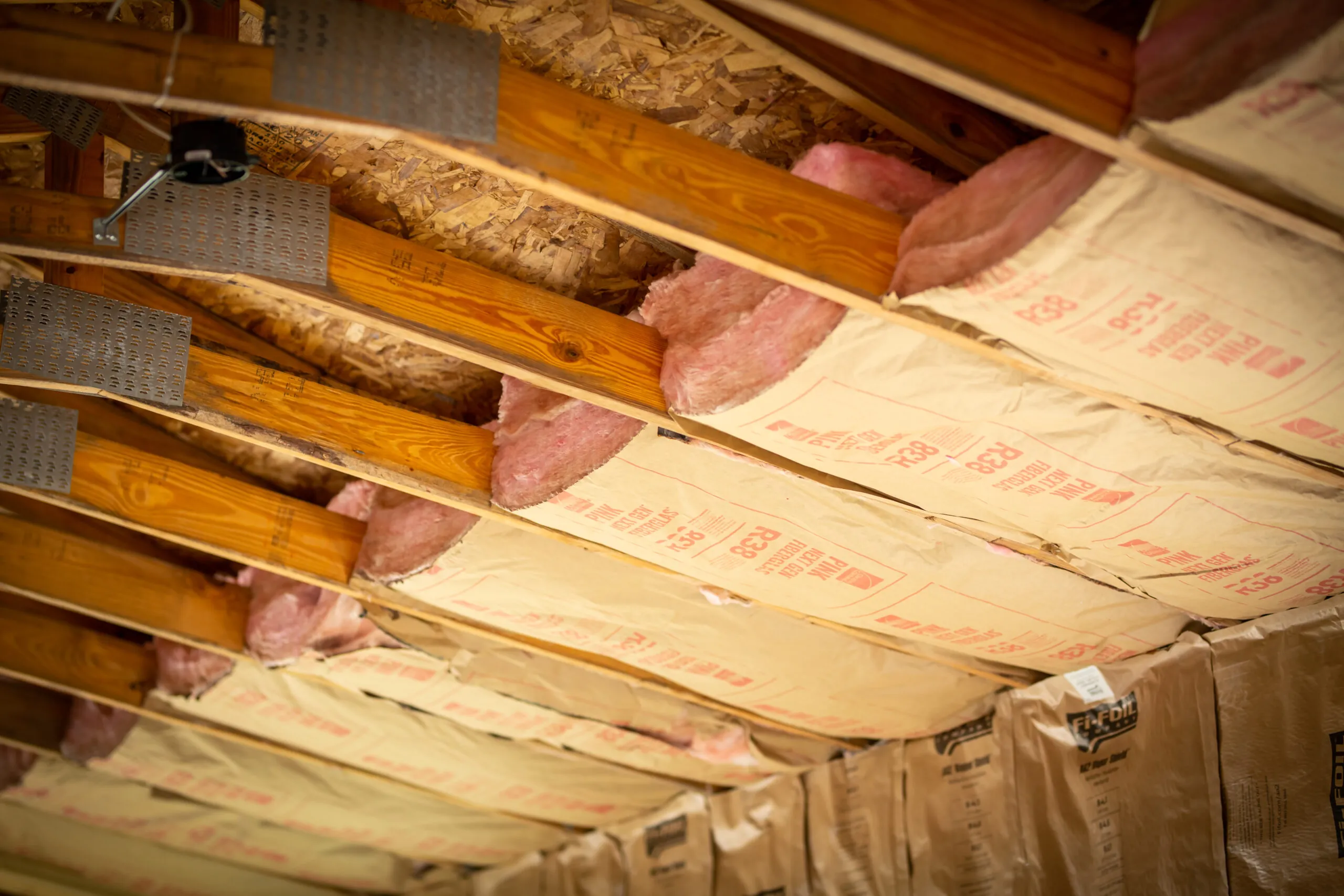
- Pre-cut fiberglass panels sized for standard joist spacing (16" or 24" on center)
- R-values from R-11 to R-38 depending on thickness
- Naturally non-combustible—will not catch fire
- Lower upfront cost than spray foam or rigid board
- Easy to inspect and replace
- Owens Corning limited lifetime warranty on fiberglass batts
Best for: New construction, open attics with standard joist spacing, budget-conscious upgrades, supplemental insulation layers
What Is Blown-In Insulation and Why Is It the Most Popular Choice?
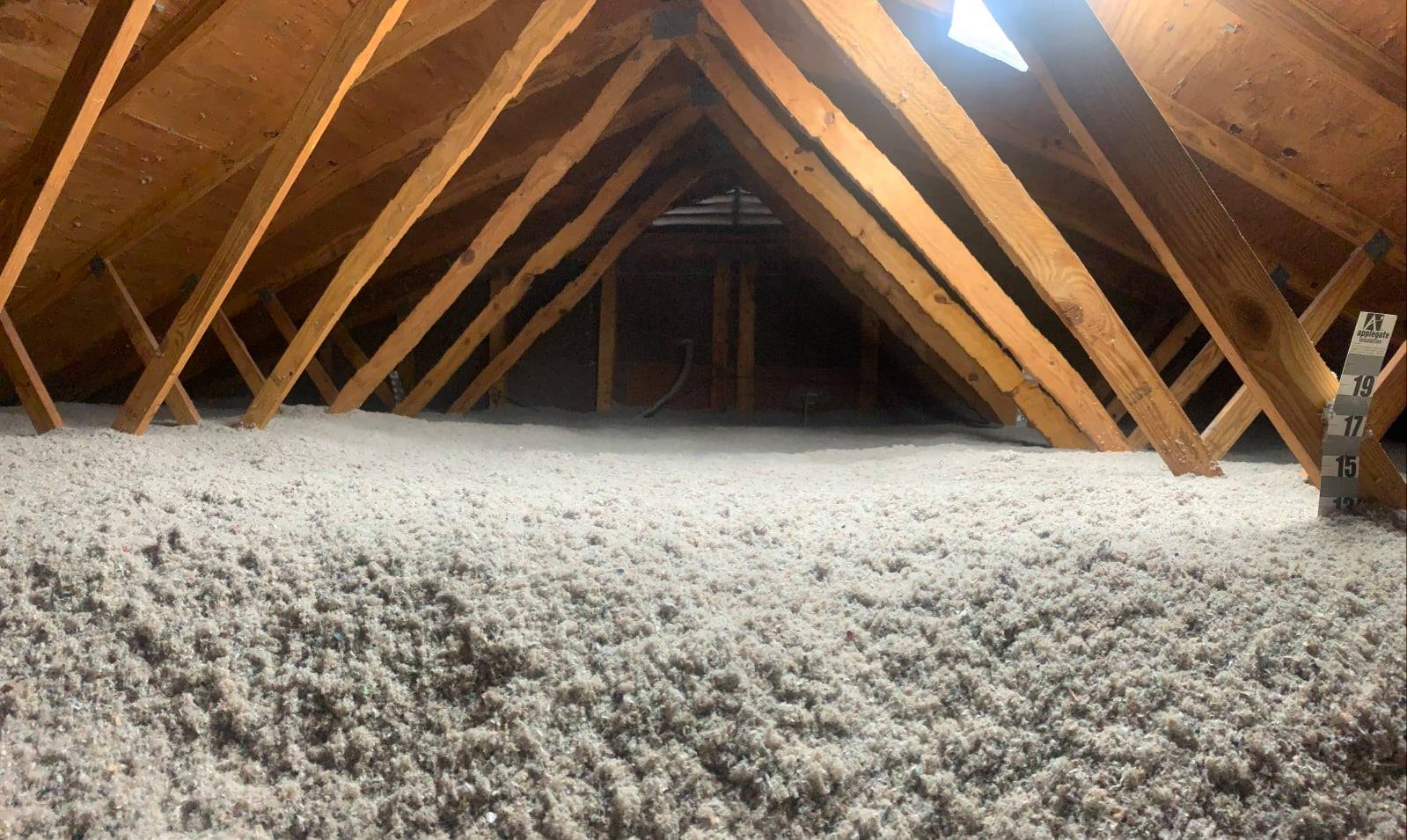
Blown-in insulation is loose-fill material—either fiberglass or cellulose—installed with a professional blowing machine. It is the most popular attic insulation choice for existing Los Angeles homes because it fills gaps, conforms around obstacles (pipes, wires, ductwork), and provides complete, even coverage that batts simply cannot match in real-world attics.
- Fills every gap, crack, and irregular space—complete coverage
- Conforms around pipes, wires, ductwork, and other obstacles
- Fast installation—most attics completed in 4–6 hours
- Can be added over existing insulation (if clean)
- Available in fiberglass (non-combustible) or cellulose (fire-retardant treated)
- Owens Corning limited lifetime warranty on blown-in fiberglass
- Most older LA homes benefit significantly from blown-in upgrades
Best for: Existing attics with obstacles, irregularly shaped spaces, homes needing R-value upgrades, most Los Angeles residential homes
What Is Spray Foam Insulation and When Should You Use It in Your Attic?
Spray foam insulation is a premium insulation product applied as a liquid that expands into a rigid or semi-rigid foam, filling every crack, gap, and void. It provides the highest R-value per inch of any insulation type and creates an air-tight seal that dramatically reduces energy loss. Spray foam is available in two types: open-cell (R-3.5–R-3.7 per inch) and closed-cell (R-6.0–R-7.0 per inch).
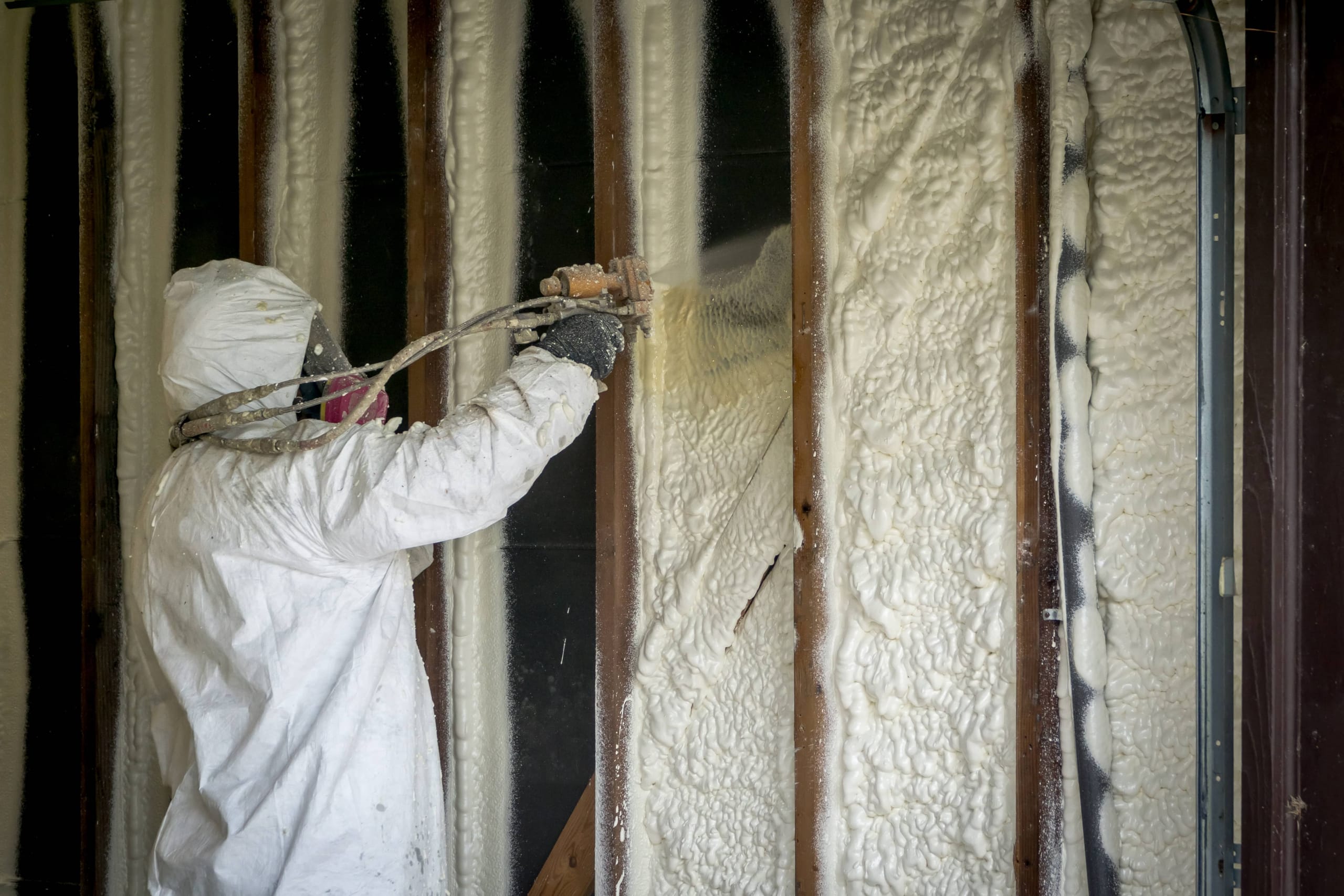
- Highest R-value per inch—R-6 to R-7 for closed-cell
- Creates an air-tight seal—reduces air infiltration by up to 95%
- Closed-cell doubles as a vapor barrier
- Expands to fill every gap and void—no gaps, no thermal bridging
- Ideal for vaulted ceilings and cathedral ceilings
- Includes fire retardants—tested to ASTM E84 standards
- Owens Corning limited lifetime warranty on spray foam
Best for: Vaulted ceilings, cathedral ceilings, crawl spaces, air sealing, maximum R-value in minimal thickness, energy optimization projects
Spray foam is a premium solution—it costs 2–3x more than blown-in. But for vaulted ceilings where you cannot use blown-in, or for homeowners who want maximum energy efficiency, spray foam delivers unmatched performance.
Learn more about spray foam attic insulationWhat Is Radiant Barrier and Why Do We Recommend It for Every Los Angeles Attic?
Radiant barrier is the single most underrated attic upgrade in Los Angeles, and we are passionate about installing it. Radiant barrier is a highly reflective material—typically aluminum foil laminated to a substrate—installed on the underside of the roof deck or draped over the attic insulation. It reflects up to 97% of radiant heat before it ever enters your attic space.
In Los Angeles, where we get 284+ sunny days per year and summer temperatures regularly exceed 100°F, the sun beats down on your roof and radiates heat directly into your attic. Traditional insulation slows that heat from reaching your living space, but radiant barrier reflects it back before it even reaches the insulation. The result is an attic that stays 20–30°F cooler, dramatically reducing your AC workload and energy bills.
Reflects 97% of Radiant Heat
Radiant barrier reflects solar radiation before it heats your attic air and insulation. The physics is simple: reflected heat never becomes a problem.
Cuts Cooling Costs 5–15%
When combined with proper insulation, radiant barrier can reduce summer cooling costs by an additional 5–15% beyond insulation alone.
Drops Attic Temperature 20–30°F
Attics with radiant barrier stay dramatically cooler in summer, reducing heat load on your HVAC system and extending equipment life.
Low Cost, High Return
Radiant barrier costs only $0.75–$1.50 per sq ft installed. It pays for itself in energy savings within 1–3 years in the Los Angeles climate.
We love adding radiant barrier to every attic insulation project. It is the highest-ROI upgrade we offer—low cost, fast installation, immediate results.
Read our complete guide to radiant barrier insulationShould You Insulate the Roof Deck Instead of (or In Addition to) the Attic Floor?
Most attics are insulated at the attic floor (between the joists). But in some situations—especially vaulted ceilings, cathedral ceilings, and conditioned attic spaces—insulating the roof deck (the underside of the roof) is the better approach. Roof deck insulation brings the attic inside the thermal envelope of your home, keeping it cooler and drier.
Two common methods for insulating the roof deck in Los Angeles:
Rigid Foam Board Insulation
Rigid foam boards—including extruded polystyrene (XPS / Styrofoam™), expanded polystyrene (EPS), and polyisocyanurate (polyiso)—are installed on top of or beneath the roof deck. They provide continuous insulation without thermal bridging at rafters. Pink fiberglass rigid board and blue/pink Styrofoam board are the most common options we see in Los Angeles. R-values range from R-3.8 to R-6.5 per inch depending on material type.
Best for: Above-deck insulation during roof replacement, vaulted ceilings, low-slope roofs, continuous thermal barrier
Radiant Barrier on the Roof Deck
Radiant barrier installed directly on the underside of the roof deck (stapled to rafters or applied as sheathing) is the most common roof-deck-level insulation upgrade in Los Angeles. It reflects radiant heat from the roof surface before it radiates into the attic space. This is the approach we recommend most often for existing homes because it can be installed without removing the roof.
Best for: Existing homes, retrofit upgrades, maximum heat reflection, cost-effective roof deck treatment
What Warranties Cover Attic Insulation in Los Angeles?
Every attic insulation project we install comes with two layers of warranty protection—our workmanship warranty and the manufacturer's product warranty:
| Warranty Type | Coverage | Details |
|---|---|---|
| Our Workmanship Warranty | 1 Year | Covers installation defects, settling, gaps, and any workmanship issues. |
| Owens Corning Fiberglass Batts | Limited Lifetime | Covers material defects for the life of the product in the original home. |
| Owens Corning Blown-In Fiberglass | Limited Lifetime | Covers material defects. Requires professional installation. |
| Owens Corning Spray Foam | Limited Lifetime | Covers material defects and R-value performance. |
Download manufacturer warranty documents:
For complete warranty information on roofing and insulation, visit our warranties page.
Does Your Attic Have Mold? Why Mold Remediation Must Happen Before New Insulation.
Mold in your attic is more common than most Los Angeles homeowners realize. Poor ventilation, roof leaks, and condensation create the warm, moist environment mold needs to thrive. Installing new insulation over mold is like putting new carpet over a wet floor—it traps the problem and makes it worse.
Signs of Attic Mold
- Dark spots or discoloration on roof deck (underside of plywood)
- Musty or earthy smell when entering the attic
- Visible fuzzy or powdery growth on wood surfaces
- Allergic reactions, respiratory irritation, or persistent coughing among family members
- History of roof leaks, even small or 'fixed' ones
Our Mold Remediation Process
- Remove all contaminated insulation from the attic
- HEPA vacuum all surfaces to remove mold spores
- Treat affected wood surfaces with professional-grade antimicrobial
- Fix the moisture source—improve ventilation, repair leaks
- Sanitize entire attic with Microban antimicrobial treatment
- Install fresh, clean insulation only after remediation is complete
Mold remediation is not just about the attic—it is about the air your family breathes. Air movement through ceiling penetrations, ductwork, and gaps can circulate mold spores from the attic into your living space. We address the root cause, not just the symptoms.
What Is Microban Sanitization and Why Do We Treat Every Attic We Insulate?
After removing old insulation and before installing new material, we sanitize the entire attic with Microban antimicrobial treatment. Microban is an EPA-registered antimicrobial product that kills bacteria, mold, mildew, and odor-causing organisms on contact—and continues protecting surfaces long after application.
Why Microban Matters for Your Attic
- Kills 99.9% of bacteria, mold spores, and mildew on contact
- Eliminates odors from rodent urine, droppings, and nesting materials
- Provides lasting antimicrobial protection on treated surfaces
- EPA-registered—safe for residential use when applied by professionals
- Creates a clean, sanitized surface for fresh insulation installation
- Improves indoor air quality by eliminating attic-sourced allergens and contaminants
Most attic insulation companies skip sanitization. They blow new insulation on top of surfaces contaminated with decades of rodent droppings, dust mites, mold spores, and allergens. We treat every attic we work in because we believe clean insulation starts with a clean attic.
Why Is Sealing Attic Floor Penetrations Critical Before Installing Insulation?
Before any new insulation goes in, we seal every penetration in your attic floor—recessed lights, electrical boxes, plumbing pipes, HVAC ductwork connections, wire runs, and any other opening that allows air to move between your living space and your attic. This step is required by Title 24 and it is one of the most important things we do.
Why does sealing matter so much? Because air leakage through attic floor penetrations accounts for up to 40% of a home's total energy loss. No amount of insulation compensates for unsealed holes. Warm, moist air from your living space rises into the attic through these openings, creating condensation on cold surfaces, feeding mold growth, and carrying your heated or cooled air straight into the attic where it is wasted.
Recessed Can Lights
The single biggest air leakage point in most attics. Each unsealed recessed light can leak 10+ CFM of conditioned air into the attic.
Electrical Boxes & Outlets
Ceiling-mounted electrical boxes, junction boxes, and outlet boxes on top-floor walls all create direct air pathways to the attic.
Plumbing Penetrations
Pipes passing through the attic floor often have oversized holes that leak significant amounts of air and allow moisture migration.
HVAC Ductwork Connections
Gaps around duct boots, supply registers, and return air plenums are major air leakage sources in Los Angeles homes.
Bathroom Exhaust Fans
Fan housings are rarely sealed where they penetrate the ceiling. This allows conditioned air to bypass the insulation completely.
Attic Hatch or Pull-Down Stairs
The attic access point is often the largest single air leakage hole in the home. We seal and insulate every attic hatch we encounter.
We use fire-rated caulk, spray foam sealant, and code-compliant materials to seal every penetration before insulation is installed. This is not an optional extra—it is a fundamental step that most insulation companies skip.
Do You Seal Holes Where Rodents, Bugs, and Debris Enter the Attic?
Yes. Sealing pest entry points is a standard part of every attic insulation project we perform. Los Angeles attics are notorious for rodent intrusion—rats, mice, and squirrels enter through surprisingly small openings and turn your attic into a nesting ground. Their droppings contaminate insulation, their urine creates health hazards, and their gnawing damages wiring (a fire risk).
Common Pest Entry Points We Seal
- Gaps where roof meets walls (eave-to-wall transitions)—the number one rodent entry point in Los Angeles homes
- Openings around plumbing vent pipes passing through the roof
- Gaps around electrical conduit, cable, and phone line entries
- Deteriorated or missing soffit vent screens—bugs, birds, and rodents enter freely
- Gaps at gable vent frames and attic access points
- Cracks in stucco or siding where walls meet the roofline
- Deteriorated flashing at roof-to-wall junctions
We use galvanized steel mesh, steel wool, fire-rated caulk, and expanding foam to seal every entry point. New insulation installed over unsealed pest entry points will be contaminated again within months. Sealing first protects your investment and your family's health.
This service is included in our complete attic insulation clean-out packages. It is not an upsell—it is how the job should be done.
Could Your Attic Insulation Be Affecting Your Family's Health?
Old insulation in your attic may contain:
- Rodent droppings and urine—a serious health hazard carrying hantavirus and other pathogens
- Mold spores—causes respiratory irritation, allergic reactions, and chronic health issues
- Dust mites and allergens—aggravates asthma and allergies year-round
- Dead insects and pest nesting materials
- Decades of accumulated dust and particulates
Air movement through ceiling penetrations and gaps circulates these contaminants from the attic into your living space. That can mean chronic allergies, respiratory irritation, persistent odors, and poor indoor air quality. This is not just about comfort—it is about the air your family breathes every day.
Ignoring contaminated insulation during roof replacement is a missed opportunity to protect your family's health.
Why Is Roof Replacement the Perfect Time to Upgrade Attic Insulation?
Roof replacement gives us direct access to your attic space through the open deck. This means we can:
- Remove old contaminated insulation efficiently
- Seal all attic floor penetrations and pest entry points
- Treat the entire attic with Microban sanitization
- Install radiant barrier on the roof deck
- Add fresh insulation to code (R-38 or higher)
- Upgrade ventilation to proper balance
- Do all of this at a fraction of the standalone cost
Doing insulation as a separate project later means crawling through low-ceiling attic spaces—increasing labor time and cost by 30–50%. Take advantage of the open attic during roof replacement and get it done right the first time.
A Roof Is Not Just Shingles.
It is a system. And every component must work together:
Insulation
Ventilation
Radiant Barrier
Air Sealing
Fire Resistance
When we say we install roofs, we mean the entire system.
If one component fails, the whole system underperforms.
Explore Our Attic Insulation Guides
Click any topic below for a detailed deep-dive guide:
Title 24 Requirements
California code compliance for LA homes
Read Full GuideFire-Resistant Insulation
Protect your home in wildfire zones
Read Full GuideAttic Insulation R-Value
Understanding thermal resistance ratings
Read Full GuideFiberglass Batts
Traditional batt insulation pros & cons
Read Full GuideBlown-In Insulation
Most popular choice for LA attics
Read Full GuideSpray Foam Insulation
Maximum R-value per inch + air sealing
Read Full GuideRadiant Barrier
Reflect 97% of summer radiant heat
Read Full GuideRadiant Barrier Roof Decking
Pre-laminated decking & installation
Read Full GuideHow Much Does Attic Insulation Cost in Los Angeles?
Pricing depends on insulation type, R-value, attic size, and accessibility. Here are typical installed costs for Los Angeles homes:
| Insulation Type | Cost per Sq Ft | R-Value Range | Best For |
|---|---|---|---|
| Fiberglass Batts | $1.50 – $3.50 | R-13 to R-38 | Open attics with standard joist spacing |
| Blown-In Fiberglass | $1.50 – $4.00 | R-30 to R-60 | Most attics — fills gaps and irregular spaces |
| Blown-In Cellulose | $1.25 – $3.50 | R-30 to R-60 | Budget-friendly option with good coverage |
| Open-Cell Spray Foam | $3.00 – $5.50 | R-13 to R-21 | Interior walls, sound dampening |
| Closed-Cell Spray Foam | $4.50 – $7.00 | R-21 to R-42 | Maximum performance, vapor barrier |
| Radiant Barrier (Add-On) | $0.75 – $1.50 | N/A (reflective) | Every LA attic — blocks radiant heat |
*Prices are approximate installed costs for Los Angeles County as of 2025. Actual pricing depends on attic size, accessibility, and existing conditions. Call (818) 937-4500 for a free estimate.
Attic Insulation Installation Across Greater Los Angeles
We install attic insulation in every neighborhood and city across Los Angeles County, the San Fernando Valley, San Gabriel Valley, South Bay, and surrounding areas:
Get a Free Attic Insulation Estimate
Call us today for a no-obligation attic assessment and insulation quote.
We will inspect your attic, explain your options, and give you a clear, honest price.
Roofing & insulation experts. First roofing job in 1991. Wholesale pricing. No hidden fees.
Frequently Asked Questions About Attic Insulation in Los Angeles
Frequently Asked Questions
Attic insulation in Los Angeles typically costs $1,500 to $5,000+ depending on attic size, insulation type, and R-value needed. Fiberglass batts cost $1.50–$3.50 per sq ft installed. Blown-in costs $1.50–$4.00 per sq ft. Spray foam costs $3.00–$7.00 per sq ft. Radiant barrier costs $0.75–$1.50 per sq ft. We provide free estimates with no hidden fees.